

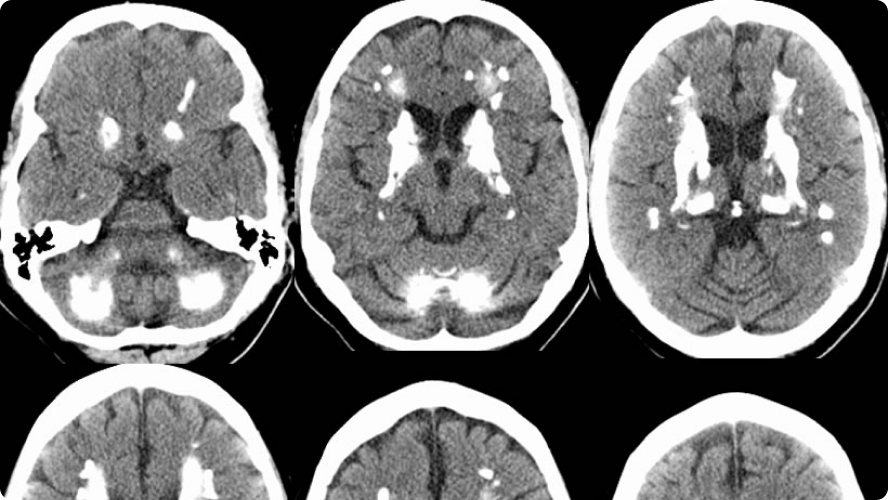
CASE 6- FAHR’S DISEASE
Lorem ipsum dolor sit amet
Lorem ipsum dolor sit amet. Est nihil praesentium rem voluptatem consequatur aut nihil iusto cum animi inventore est laborum error est assumenda quisquam ut quaerat distinctio. Ea necessitatibus tempora ut porro quis rem commodi facere rem culpa voluptatem sit magnam consectetur ea nisi suscipit et perspiciatis eaque. Id provident minima eos expedita consequatur et corporis alias. Eum temporibus voluptatum ea maxime minima non quia voluptatem ut excepturi quia qui voluptatem consequatur ea atque dolorum eum voluptatem quia.
DIAGNOSIS
Ischemic cardiomyopathy involving LAD and partly LCX territory
Findings
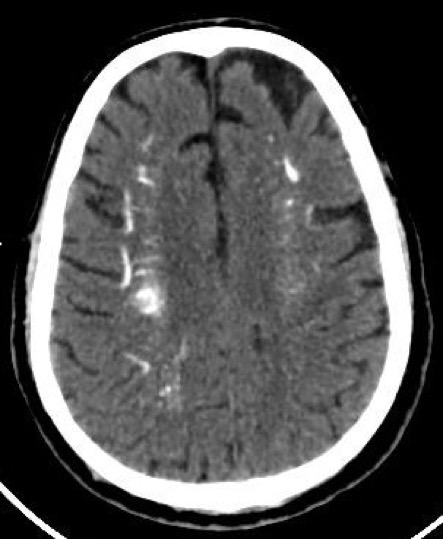
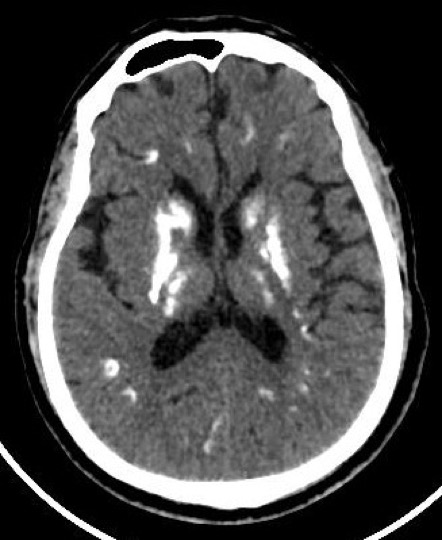
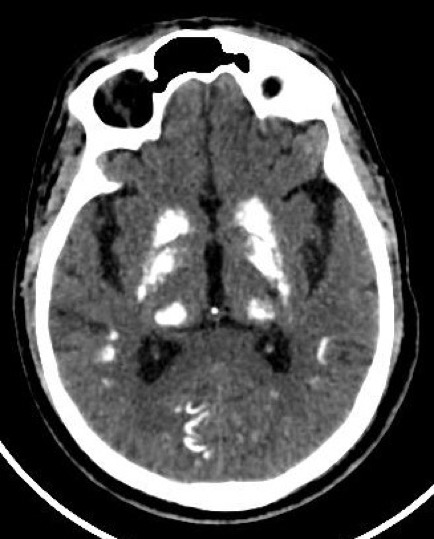
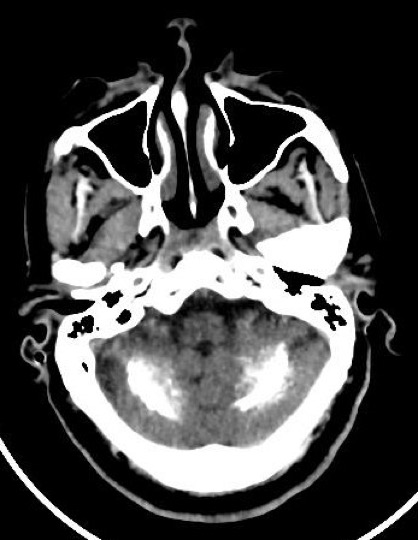
Near symmetric patchy calcifications are seen in bilateral cerebral and cerebellar hemispheres including:
- Bilateral basal ganglia
- Thalami
- Dentate nuclei
- Bilateral corona radiata.
Discussions
Fahr’s disease, also known as bilateral striatopallidodentatecalcinosis, is characterized by abnormal vascular calcium deposition, particularly in the basal ganglia, cerebellar dentate nucleiand white matterwith subsequent atrophy. It typically presentsin 40 to 60 years of age
- Primary: equivalent to familial cerebral ferrocalcinosisor primary familial brain calcification (now the preferred term), with no underlying other cause. Its usually autosomal dominant.
- Secondary: due to an underlying metabolic, infective or other cause
The condition that has been closely described with diffuse, bilateral, symmetric striopallidodentatecalcinosis is primary hypoparathyroidism,lupus, tuberous sclerosis, Alzheimer’s disease, myotonic muscular dystrophy and mitochondrial encephalopathies. When there is no explainable cause for striopallidodentatecalcinosis, the condition is termed as Fahr’s disease.
The treatment of Fahr’s diseaseis directed to the identifiable cause especially hypoparathyroidism. In other cases, symptomatic or conservative therapy with clinical follow-up is the rule. Prognosis is variable, cannot be predicted and is unrelated to the extent of calcification. Death usually occurs secondary to neurological deterioration.